Is Tea Tree Oil Related to Tea? Plants Called Tea That Aren't Tea
Tea tree oil isn't related to the tea in your mug, and it should never be swallowed. Meet the real tea plant, find out how tea tree got its name, and get to know rooibos, honeybush and other plants called tea.

If you've ever stood in the bathroom holding a little bottle of tea tree oil and wondered whether it's related to the tea in your mug, you're in good company. It's a fair question with a clear answer: no. Tea tree is a completely different plant, and its oil is never something to drink. It's one of several plants that picked up the word "tea" along the way, so let's sort out who's who.
First, the important part: never swallow tea tree oil
Tea tree oil is poisonous if swallowed. Don't drink it, don't add it to tea or food, and don't brew tea from tea tree leaves. Even a small amount swallowed by a child can cause serious symptoms, including confusion, trouble walking and, in some cases, coma.
Keep it with your medicines, in the bottle it came in, somewhere locked where little hands can't find it. If someone swallows it, call Poison Control right away at 1-800-222-1222 in the US, use the free online tool at poison.org, or call your local emergency number.
Pets need protecting too. Concentrated tea tree oil can poison dogs and cats, whether they lick it up or it's put on their skin. Keep bottles well away from them, and if there's an accident, call your veterinarian or a pet poison helpline.
What counts as real tea
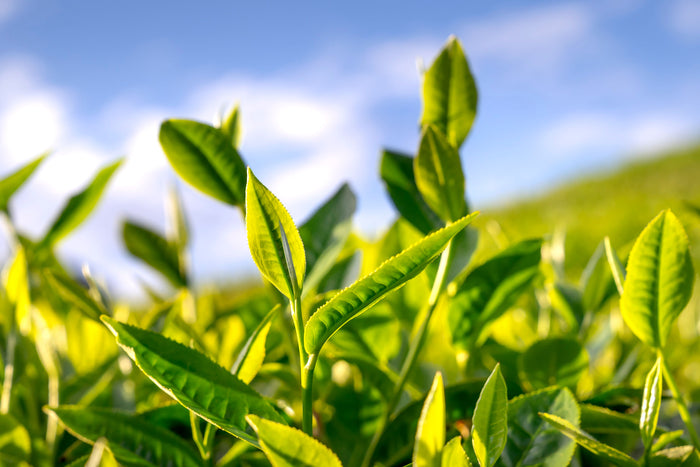
Every true tea comes from one plant, Camellia sinensis, an evergreen shrub in the camellia family (Theaceae). Green, white, oolong, black and dark teas like pu-erh are all the same leaf, just processed in different ways. If you'd like to meet the plant properly, our post on where the tea plant grows and what it needs is a good place to start.
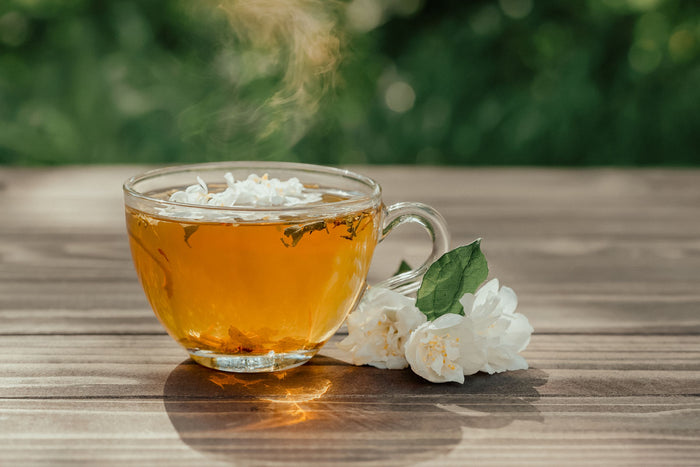
Anything steeped from a different plant is technically a tisane, which most of us simply call herbal tea. Mint, chamomile, hibiscus and rooibos all belong here. We're not about to start correcting anyone at the dinner table over it. The difference matters most when you're reading a label, especially if you're keeping an eye on caffeine, since most herbal teas have none.
So what is tea tree?
Tea tree is Melaleuca alternifolia, a small, shrubby tree that grows wild only in eastern Australia, in parts of New South Wales and Queensland. It belongs to the myrtle family (Myrtaceae), which also includes eucalyptus and clove. The tea plant sits in an entirely different family, so the two aren't close relatives at all.
The oil in those little bottles is made by steam-distilling the leaves. That's why it's so concentrated, and why a few drops behave nothing like a cup of tea.
Why is it called tea tree?
The name goes back to the late 1700s and a craving for a proper cuppa far from home. Accounts credit Captain James Cook's crew, and the European settlers who came after them, with steeping the leaves of certain Australian shrubs as a stand-in for tea. Those shrubs were mostly in a related genus, Leptospermum, and "tea tree" stuck to them. Over time the name spread to their myrtle-family cousins too, including Melaleuca alternifolia. So the oil plant got its nickname secondhand, a bit like being called by your older cousin's name at every family reunion.
None of that history makes the oil safe to drink. Whatever sailors once brewed, tea tree oil today is a concentrated product meant only for use on the outside of the body, and only as its label directs.
Other plants called tea that aren't tea
Rooibos
Rooibos (Aspalathus linearis) is a shrub in the legume family (Fabaceae) from South Africa's Western Cape, where the tea forms grow mainly around the Cederberg mountains. Growers cut the young branches, chop and bruise them, then let them sweat in heaps. That oxidation turns the leaves a rusty red and gives them their natural sweetness before they're dried in the sun. It's naturally caffeine-free. For a plain, unflavored cup, Lathered Artisan's Rooibos Herbal Tea is simply rooibos leaf grown in South Africa, mild and velvety with a soft sweetness and a hint of citrus.
Honeybush
Honeybush is rooibos's sweet-natured neighbor. It's a group of Cyclopia species, also in the legume family, that grows only in the fynbos shrublands of South Africa's Western and Eastern Cape. The name most likely comes from the yellow, honey-scented flowers that cover the bushes in spring. The leaves and stems are chopped, left to ferment in heaps or with gentle heat, then dried, and the tea has no caffeine. Novel Tea Book Shop's Honeybush Loose Leaf Tea comes from the Eastern Cape and drinks mellow and naturally sweet, with a honeyed note. Steep it in just-boiled water for about five minutes.
New Jersey tea
New Jersey tea (Ceanothus americanus) is a small shrub native to the United States, in the buckthorn family (Rhamnaceae). During the Revolutionary War, colonists dried its leaves and brewed them as a substitute, even though they contain no caffeine. Native American peoples along the Missouri River also used the leaves for tea. Today it's better known as a garden shrub with frothy white flowers.
We share New Jersey tea as history, not as a foraging suggestion. Never brew a wild plant unless you can identify it with complete certainty and know it's safe to drink. When in doubt, leave it be.
How to tell true tea from herbal tea on a label
- Look for Camellia sinensis, or words like black, green, white, oolong or pu-erh. Those are true teas, and they contain caffeine.
- Herbal blends list plants like rooibos, honeybush, peppermint, chamomile or hibiscus instead.
- Some blends mix the two, such as an Earl Grey with lavender, so check the full ingredient list if caffeine matters to you.
- "Decaf" and "caffeine-free" aren't the same thing. Our caffeine guide explains the difference.
When you're ready to explore the tea-that-isn't-tea side of the shelf, browse our Herbal & Caffeine-free collection. And if growing your own sounds fun, our guide to growing mint for tea is a friendly first project.
Quick answers
Is tea tree oil made from tea leaves?
No. It's distilled from the leaves of Melaleuca alternifolia, an Australian plant that isn't closely related to the tea plant, Camellia sinensis.
Can you drink tea tree oil or make tea with it?
No. Tea tree oil is poisonous if swallowed. If someone swallows it, call Poison Control right away at 1-800-222-1222 in the US or your local emergency number.
Is tea tree oil safe around pets?
Concentrated tea tree oil can poison dogs and cats, whether it's licked up or put on their skin. Keep it out of their reach and call your veterinarian if there's an accident.
Is rooibos a real tea?
Not technically. Rooibos is an herbal tea made from a South African shrub in the legume family, and it's naturally caffeine-free.
What is a tisane?
A tisane is any drink steeped from plants other than Camellia sinensis, such as herbs, flowers, roots, fruit or spices. Most of us just call it herbal tea.
Sources
Tea Tree Oil, Poison Control (National Capital Poison Center)
Tea Tree Oil, NIH National Center for Complementary and Integrative Health
Tea Tree Oil, Pet Poison Helpline
Concentrated tea tree oil toxicosis in dogs and cats: 443 cases (2002–2012), PubMed, US National Library of Medicine
December Plant Profile: Tea Trees (Leptospermum species), University of Washington Botanic Gardens
Leptospermum lanigerum, Australian Native Plants Society (Australia)
Aspalathus linearis, PlantZAfrica, South African National Biodiversity Institute
Cyclopia genistoides, PlantZAfrica, South African National Biodiversity Institute
New Jersey Tea Plant Fact Sheet, USDA NRCS
New Jersey Tea, Grow Native!