How to Grow Mint for Tea: Planting, Harvesting and Drying Your Own
Grow your own mint for tea, from a pot that won't take over the garden to harvesting, drying and brewing the leaves, plus the safety points to know first.

If you want to grow mint for tea, you've picked one of the friendliest herbs there is. It roots easily, forgives the odd missed watering and comes back every spring, usually with reinforcements. One good pot can give you fresh leaves all summer and a jar of dried mint for winter.
Which mint makes the best tea?
Peppermint (Mentha × piperita) is bold and cooling, the flavor most of us picture when someone says "mint tea." Spearmint (Mentha spicata) is softer and sweeter, and it's the traditional mint in Moroccan tea. If that's your cup, look for a variety sold as Moroccan mint.
Buy a plant labeled with its name and rub a leaf before you take it home. Named varieties are grown from cuttings or divisions so each plant matches its parent, which makes a nursery plant (or a cutting from a friend's mint) a surer bet than a seed packet.
How to plant mint and keep it in its place
Mint spreads by underground stems and runners, and nobody has ever accused it of being shy. In an open bed it can take over a corner in a season or two. A pot roughly 12 to 16 inches across, with drainage holes and good potting mix, keeps it polite. If you'd rather plant it in the ground, sink a bottomless pot into the bed with the rim a little above the soil, then snip any runner that tries to climb out.
Mint grows in sun or part shade, though full sun gives you the most leaves. Keep the soil evenly moist, and check pots often in warm weather since they dry out faster than beds. Most mints are hardy perennials that die back in the cold and sprout again in spring.
Growing mint indoors for winter tea
Pot up a piece of mint in autumn and bring it in to your sunniest windowsill. It grows slowly in winter, so pick lightly. You can also stand a few healthy stems in a glass of water and pot them up once roots appear. We're based in the Pacific Northwest, where a green windowsill in January feels like a small act of defiance.
When and how to harvest mint for tea
For fresh tea, snip the soft tips just above a pair of leaves whenever the plant looks lively. New shoots branch from that spot, so regular picking makes the plant bushier. Everybody wins.
For drying, pick just as flower buds start to show, when the leaves have their fullest flavor. Once the plant is in full bloom, the leaves can turn a little bitter. Harvest in the morning after the dew has dried, and leave a few inches of leafy stem so the plant can regrow.
How to dry mint for tea
Mint leaves are juicy and can mold if they dry too slowly, so aim for warmth, dry air and good airflow.
- Skip washing if the leaves are clean. If they're dusty, rinse them in cool water, shake well and pat completely dry.
- Tie the stems into small, loose bundles and hang them upside down somewhere warm, dry and airy, out of direct sun. Or use a dehydrator, spreading the stems in a single layer and following your machine's directions for herbs.
- The leaves are done when they feel crisp and crumble easily between your fingers.
- Strip the leaves from the stems and store them whole in an airtight glass jar in a cool, dark cupboard.
Crumble the leaves only when you brew, since whole leaves keep their aroma longer. Dried mint is at its best within about a year. If the jar smells faint, the tea will taste faint too.
How to make mint tea from fresh or dried leaves
Use about a teaspoon of crumbled dried mint per 8 ounces of water. Fresh leaves are mostly water, so use roughly three times as much, about a tablespoon of torn leaves. Pour just-boiled water over the mint, cover the cup to hold in the aroma and steep for 5 to 10 minutes.
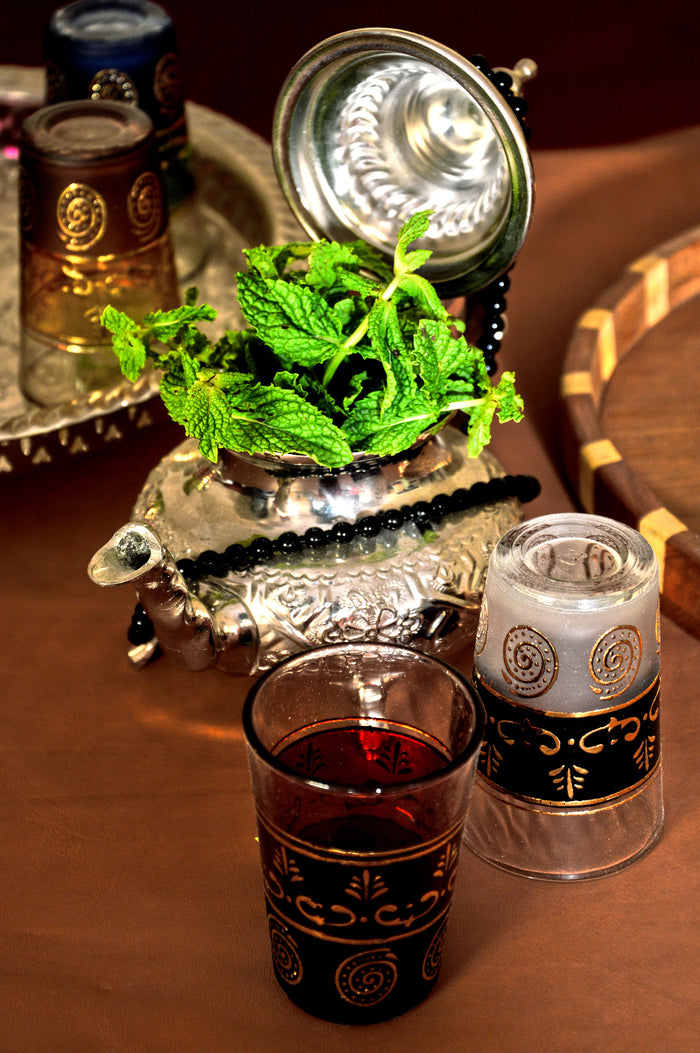
A few fresh sprigs in a pot of green tea make a homemade take on Moroccan-style tea, and our story of tea in Morocco explains the ritual behind it. Mint cold brews nicely too, using the method in our cold brew guide.
No garden yet? Start with a cup
To taste-test before you plant, try Novel Tea Book Shop's Peppermint Loose Leaf Tea, which is nothing but peppermint leaf. Little Prayer Tea Company's Moroccan Mint Green Tea blends peppermint and spearmint with gunpowder green tea, so you can meet both mints in one cup. For a wintry, caffeine-free blend, Snow Angel from Leaves of Leisure mixes both mints with ginger, rooibos and rosehip.
Find more in Herbal & Caffeine-free and our Morocco collection, or pick your next homegrown project from our guide to rose hip tea.
Good to know before you brew
Mint is about as easygoing as herbs get, and the mints you'll find at a garden center are fine for tea. There's one relative worth knowing by name, though: pennyroyal (Mentha pulegium). It smells minty and is easy to mistake for ordinary mint, but it's toxic, and people have become seriously ill after brewing it by mistake. Buy plants by name, if a label says pennyroyal, or you aren't sure what a plant is, don't brew it.
Wild mint is another story. Lots of plants in the mint family share square stems and a minty smell, so those clues aren't enough on their own. Wild mints also like damp stream banks and ditches, the same places where water hemlock, a very toxic plant, can grow. If you'd like to forage anyway, follow the usual ground rules:
- Only pick a plant you can identify with 100% certainty. When in doubt, leave it.
- Avoid roadsides, sprayed lawns and fields, and anywhere that might be polluted or treated with chemicals.
- Get the landowner's permission and follow local rules for parks and public land.
- Take only a small share from any patch, and never pick rare or protected plants.
- Wash and dry what you gather well before you dry or brew it.
If you have pets, the ASPCA lists mint as toxic to dogs, cats and horses, and eating a lot of it can cause vomiting or diarrhea, so keep your pots out of nibbling range. And if you're pregnant, nursing, taking medication or have allergies, check with a healthcare professional before trying a new herbal tea.
All of which makes a good case for a pot on the windowsill. When you grow it yourself, you know exactly what's in your cup.
Quick answers
Is fresh or dried mint better for tea?
Both are good. Fresh mint tastes brighter, and dried mint keeps for months. Use about three times as much fresh mint as dried.
When should I harvest mint for drying?
Just as flower buds start to appear, in the morning after the dew has dried.
Does mint tea have caffeine?
Pure mint tea is caffeine-free, because mint doesn't come from the tea plant. Our caffeine guide explains the difference.