White Tea vs Green Tea: What's the Difference?
Both are delicate and fresh, but they are made in different ways. How white tea and green tea differ in processing, flavor, caffeine and brewing.

White tea vs green tea is a natural question. Both are pale, delicate and refreshing, and both come from the same plant, Camellia sinensis. The difference is what happens after picking. Green tea gets heated to lock in its fresh, green character. White tea is simply left to wither and dry, which is about as relaxed as tea making gets. That one small choice leads to two very different cups.
How white tea is made
White tea is the least handled of all teas. Young buds, sometimes with one or two leaves, are picked and spread out to wither slowly, often for a day or more, then gently dried. There's no rolling and no deliberate heating step to stop oxidation. A little natural oxidation happens on its own, and that softens the flavor.
Famous styles include Silver Needle (all buds), White Peony (buds and leaves) and Shou Mei (later, larger leaves). White tea began in Fujian, China, and it's now made in places like Nepal and India too.
How green tea is made
Green tea is picked and then quickly heated to stop oxidation, which keeps the leaves green. In China that usually means pan-firing in a hot wok, which brings out nutty, toasty notes. In Japan the leaves are usually steamed for a grassy, marine freshness. Then the leaves are rolled and shaped before drying.
White tea vs green tea at a glance
| White tea | Green tea | |
|---|---|---|
| Processing | Withered and dried | Heated (pan-fired or steamed), rolled, dried |
| Flavor | Soft, sweet, floral, honey, melon, hay | Grassy, vegetal, nutty, sometimes oceanic |
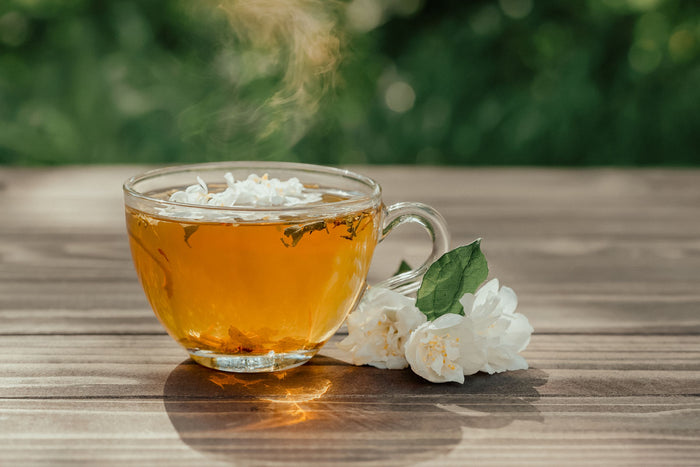
| Color in the cup | Pale gold to apricot | Pale green to yellow-green |
| Bitterness | Very low | Low to moderate, rises with hot water |
| Water temperature | 175 to 185°F | 160 to 180°F |
| Steep time | 3 to 5 minutes | 1 to 3 minutes |
What does white tea taste like?
White tea is gentle, round and naturally sweet. Think fresh hay, honey, cucumber, stone fruit or wildflowers. Aged white teas can develop notes of dried fruit and spice. Try Organic White Prakash from Nepal for a clean, bright cup, or a blend like Willapa White Lavender when you're in a floral mood.
What does green tea taste like?
Green tea has more snap. Chinese greens such as Xi Hu Long Jing taste of chestnut and sweet cream. Japanese greens taste like spring vegetables and sea air. Nepalese greens like Himalayan Mist can be bright and floral.
Does white tea have less caffeine than green tea?
Not always. It's a popular belief, but caffeine depends more on the leaf than the category. Bud-heavy white teas such as Silver Needle can be surprisingly high in caffeine, since young buds hold more of it. Water temperature and steep time matter too. Our caffeine guide explains why.
How to brew each one
White tea
Use a heaping teaspoon or two of the fluffy leaves per 8 ounces of water at 175 to 185°F, and steep 3 to 5 minutes. White tea is forgiving and rarely turns bitter, so don't panic if you wander off and steep it longer.
Green tea
Use one teaspoon per 8 ounces of water at 160 to 180°F. Steep 1 to 3 minutes and taste early. Water that's too hot is the most common reason green tea turns bitter.
For more detail, see our loose leaf brewing guide.
Which should you try first?
If you like gentle, sweet, floral flavors, start with white tea. If you like something crisper and more vivid, start with green. Or skip the decision entirely and brew one of each side by side. Explore our white tea and green tea collections.
Quick answers
Is white tea healthier than green tea?
Both are simply tea. We focus on flavor and leave health questions to qualified professionals.
Can white tea be re-steeped?
Yes. Most white teas give two or three good infusions.
Why is it called white tea?
The name comes from the fine white hairs on the young buds, which give the dry leaves a silvery look.