What Is Oolong Tea? From Floral to Roasted
Oolong spans floral and buttery to toasty and dark. What oolong tea is, how it is made, where it grows and how to brew it.

If tea had a shape-shifter, it would be oolong. One oolong tastes like orchids and fresh cream. The next tastes like toasted bread, caramel and warm stone. So what is oolong tea, and how can one category cover so much ground? It all comes down to two dials the tea maker gets to turn: oxidation and roast.
What is oolong tea?
Oolong is a partly oxidized tea made from the Camellia sinensis plant. It sits between green tea, which is barely oxidized, and black tea, which is fully oxidized. The name means "black dragon" in Chinese, a nod to the dark, twisty leaves of some traditional styles. Best tea name ever? We think so.
How oolong is made
- Withering: freshly picked leaves soften in the sun or indoors.
- Bruising: the leaves get gently tossed or shaken so their edges bruise and start to oxidize.
- Oxidation: the maker lets oxidation run anywhere from about 10 percent to more than 70 percent.
- Fixing: heat stops oxidation right where the maker wants it.
- Rolling: leaves are rolled into tight balls or long twists.
- Roasting (optional): some oolongs are roasted, lightly or deeply, for warmth and depth.
The oolong spectrum
Light and floral
Low oxidation and little roast. Expect orchid, lilac, butter and fresh green notes. Taiwan's high mountain oolongs, grown in cool, misty air, are classic examples. Try Magnolia Oolong from World Spice, a light oolong scented with magnolia blossoms.
Creamy and fruity
Medium oxidation brings in stone fruit, honey and a rounder body. Milk oolong is famous for a creaminess that comes from the leaf, no milk required. Try Premium Milk Oolong.
Toasty and dark
Higher oxidation and deeper roasts create notes of toast, caramel, cocoa and minerals. Wuyi rock oolongs from Fujian are famous for this style. Try the dark roasted Rare Leaves Black Pearl.
Flavored and scented
Oolong's body carries flavors beautifully. Try Jasmine Oolong, Oolong Goji Berry Tea or OSULLOC's Tangerine Blossom Oolong.
Where oolong grows
- Taiwan: high mountain oolongs, Oriental Beauty and roasted Dong Ding. Explore teas from Taiwan.
- Fujian, China: the birthplace of oolong and home to Wuyi rock teas and floral Tieguanyin. See teas from China.
- Guangdong, China: aromatic Dan Cong oolongs, known for natural fruit and flower notes.
- Jeju Island, South Korea: volcanic soil and sea air shape OSULLOC's Jeju Volcanic Oolong. See South Korea.
How to brew oolong
Western style
Use about one heaping teaspoon per 8 ounces of water at 185 to 205°F. Go cooler for light, floral oolongs and hotter for roasted ones. Steep 2 to 4 minutes, then re-steep three or more times. Oolong doesn't like to quit early.
Gongfu style
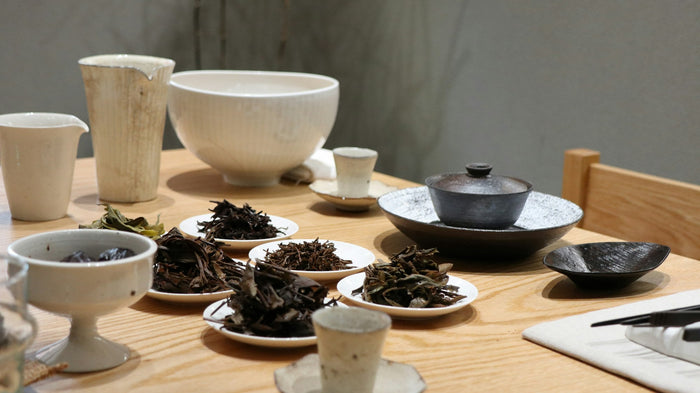
Fill a small pot or gaiwan about a quarter full with leaves (around 5 to 7 grams for 100 ml). Rinse them briefly, then steep for 20 to 40 seconds and pour off every drop. Repeat, adding a few seconds each time. Rolled oolongs slowly unfurl and change with every cup, and watching it happen is one of tea's great pleasures.
Who will love oolong?
Pretty much everyone can find an oolong to love. Floral oolongs win over green tea fans. Roasted oolongs win over coffee drinkers and black tea lovers. Want an easy, budget-friendly start? See oolong teas under $20, or browse the full oolong collection.
Quick answers
Is oolong green or black tea?
Neither. Oolong is its own category, partly oxidized and sitting right between the two.
Does oolong tea have caffeine?
Yes. It usually lands between green and black tea, though it varies. See our caffeine guide.
How many times can you steep oolong?
Usually three to five times Western style, and many more gongfu style.
What does oolong mean?
Oolong (wulong) means "black dragon" in Chinese.