What Is Pu-erh Tea? A Beginner's Guide to Aged Tea
Earthy, smooth and full of history. What pu-erh tea is, raw vs ripe, what it tastes like and how to brew it at home.

Pu-erh (say it "poo-air") is one of the most intriguing teas in the world. It's fermented, it can age for years like a good wine and it tastes like nothing else in your cupboard. If you've ever wondered what pu-erh tea is, pull up a chair. We love talking about this one.
Where pu-erh comes from
Pu-erh takes its name from Pu'er, an old trading town in Yunnan province in southwest China. True pu-erh is made from a large-leaf variety of the tea plant grown in Yunnan. For centuries it was pressed into cakes and bricks so it could travel by horse caravan along the Tea Horse Road. Somewhere along those long journeys, people noticed the tea was changing, and getting better, with time.
How pu-erh is made
The leaves are picked, withered and briefly pan-fired. Then they're rolled and dried in the sun. This base tea is called maocha, and it can go one of two ways.
Raw pu-erh (sheng)
The maocha is pressed and left to age on its own schedule. Young raw pu-erh can be bright, bitter and lively. Give it years and it mellows and deepens, picking up notes of dried fruit, wood and honey. Aged raw pu-erh can be very collectible, which is a fancy way of saying people get a little obsessive about it.
Ripe pu-erh (shou)
Ripe pu-erh came along in the 1970s as a way to speed up all that aging. The leaves are piled, moistened and turned for weeks in a controlled fermentation called wo dui. The result is dark, smooth and earthy right away, with very little bitterness. Most people start here.
What does pu-erh taste like?
Ripe pu-erh is usually described as earthy, woody and mellow. Think forest floor after rain, dark chocolate or a pile of damp autumn leaves (in the best possible way). It has a soft, thick texture and a sweet finish. Raw pu-erh is livelier, running from apricot and hay when it's young to leather and dried plum once it's aged.
Golden Pu-erh from Culinary Teas, aged five years, is a smooth and friendly place to start. See our pu-erh collection.
In the mood for something festive? Culinary Teas' Gingerbread Pu-Erh blends pu-erh and black tea with cinnamon, star anise, cocoa beans and ginger. It's a cozy way to meet pu-erh this winter.
How to brew pu-erh
Western style (mug or teapot)
- Use about one teaspoon of leaf per 8 ounces.
- Rinse first: pour near-boiling water over the leaves, wait 5 to 10 seconds and pour it away. This wakes the leaves up and rinses off any dust.
- Brew with water at 205 to 212°F for 2 to 4 minutes.
- Re-steep several times, adding a minute each round.
Gongfu style (small pot or gaiwan)
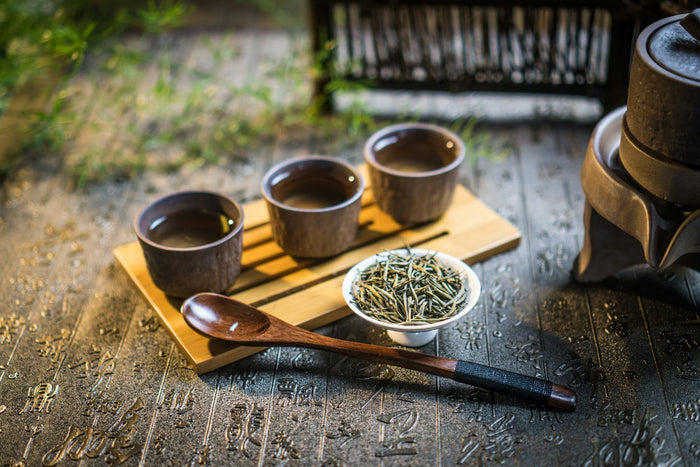
Use more leaf, about 5 to 7 grams in a small 100 ml vessel. After the rinse, steep for just 10 to 20 seconds and pour off every drop. Keep going for lots of short infusions and notice how the flavor shifts from one to the next. A small teapot or gaiwan helps.
How to store pu-erh
Unlike most teas, pu-erh likes a little air. Keep it in a cool cupboard away from strong smells, light and damp. Loose ripe pu-erh is perfectly happy in a tin or a paper bag inside a cabinet. Just maybe not the one next to the garlic.
Who will love pu-erh?
Coffee drinkers are often surprised by how satisfying it is, since it has depth and weight without the bitterness. It's also lovely after a big meal. If you like earthy flavors like mushrooms, dark chocolate or red wine, pu-erh is worth a try. Our teas for coffee drinkers has more ideas.
Quick answers
Is pu-erh a black tea?
No. In China it belongs to the "dark tea" family, which is fermented after processing. Fun twist: the tea Westerners call black tea is known as red tea in China.
Does pu-erh have caffeine?
Yes. It's made from the tea plant, so it has caffeine in roughly the same range as other true teas.
Why should I rinse pu-erh?
A quick rinse loosens compressed leaves and washes away dust from aging, so your first cup tastes cleaner.
Does pu-erh go bad?
Stored well, pu-erh is famous for getting better with age instead of spoiling. Keep it dry and away from strong odors.